
Front task light for keyboard, notebook, reading, and work surface.
QUNTIS EYE-CARE DESIGN
For the hours
For the hours
that add up.
Layered Desk Lighting for long screen sessions.
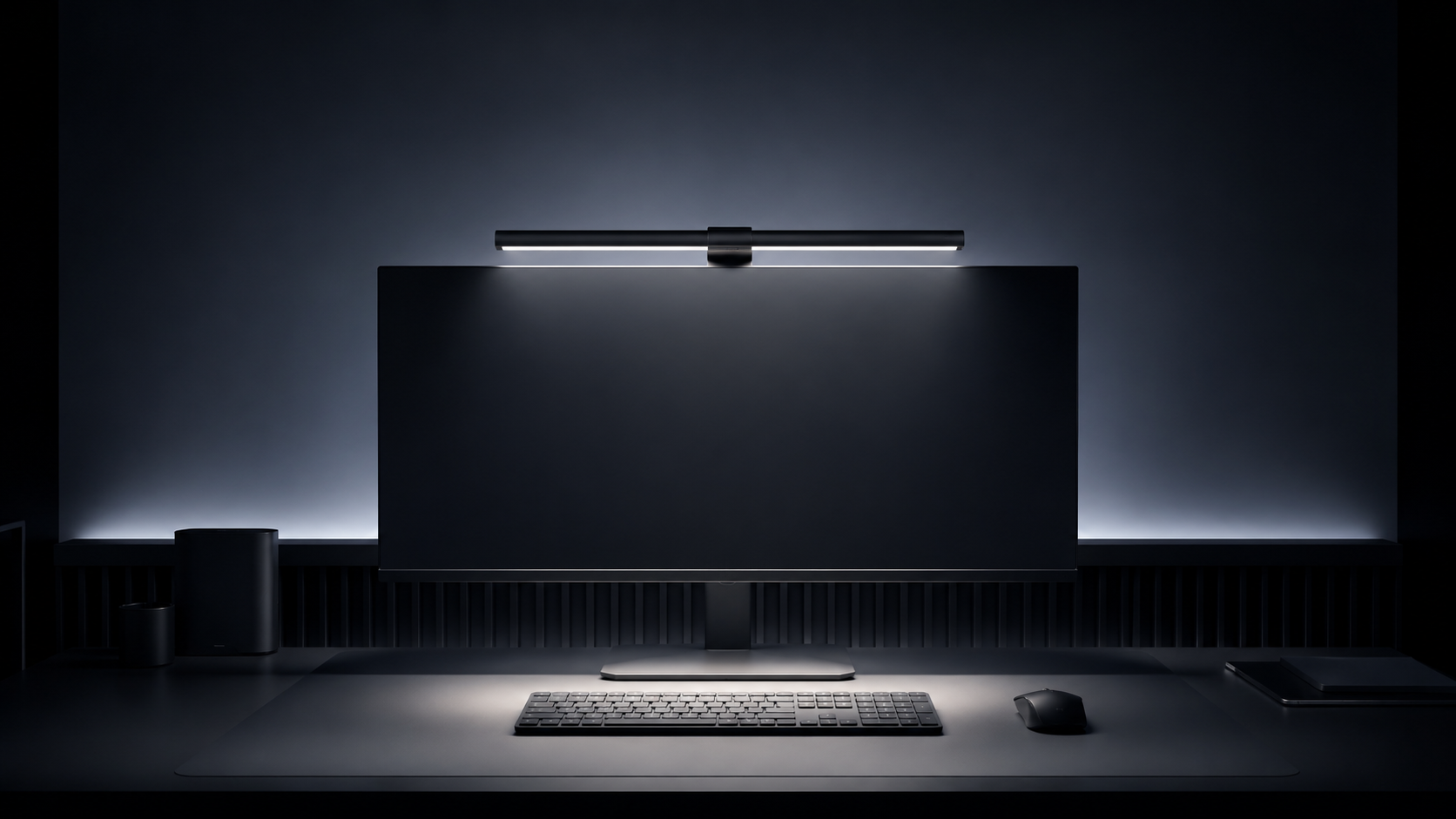
Quntis builds a screen-work light environment around three layers: front task light, soft monitor surroundings, and ambient depth.
Outer layer
Inner layer
Core layer
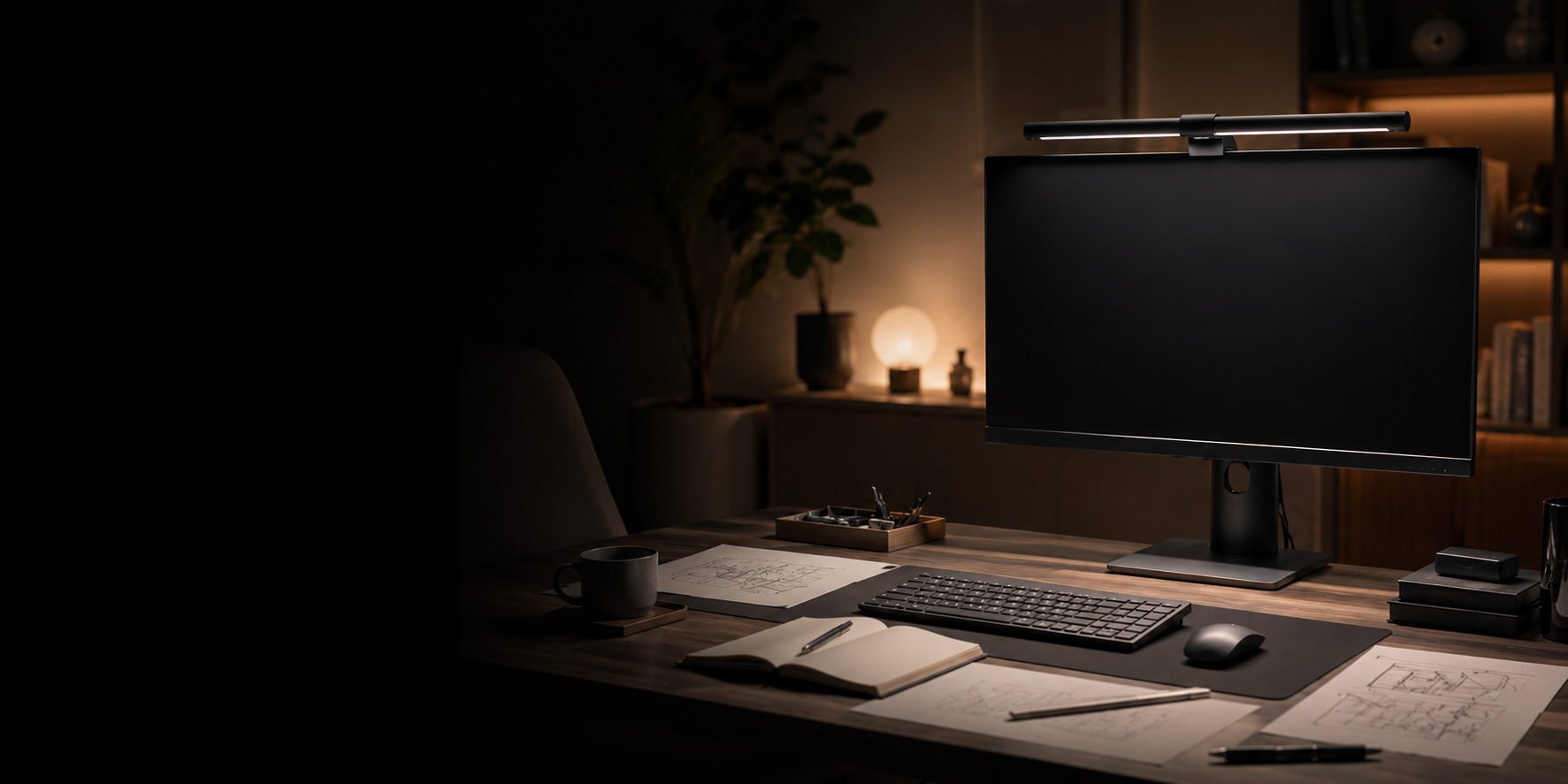
Not just brighter. Better placed.
Quntis Eye-Care Design starts with how light behaves around the screen. Useful light is directed toward the keyboard, notebook, and work surface, while the monitor area stays visually clean and the surrounding room remains softly balanced for long screen sessions.
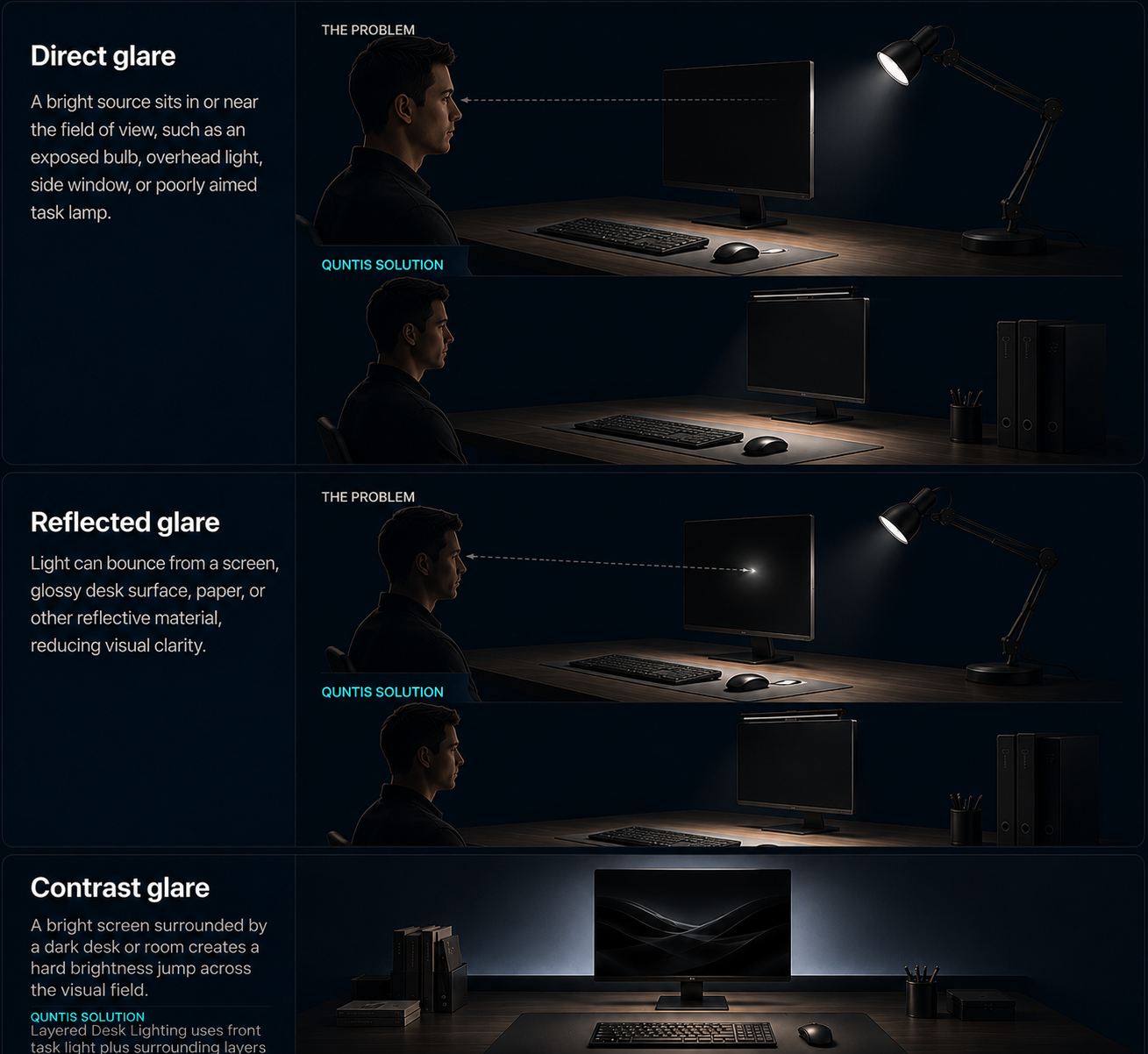
Screen Comfort Logic
Three ways desk lighting can interrupt screen comfort.
It is not only about brightness. It is about where light sits, where it lands, and how strongly the screen separates from the desk and room.
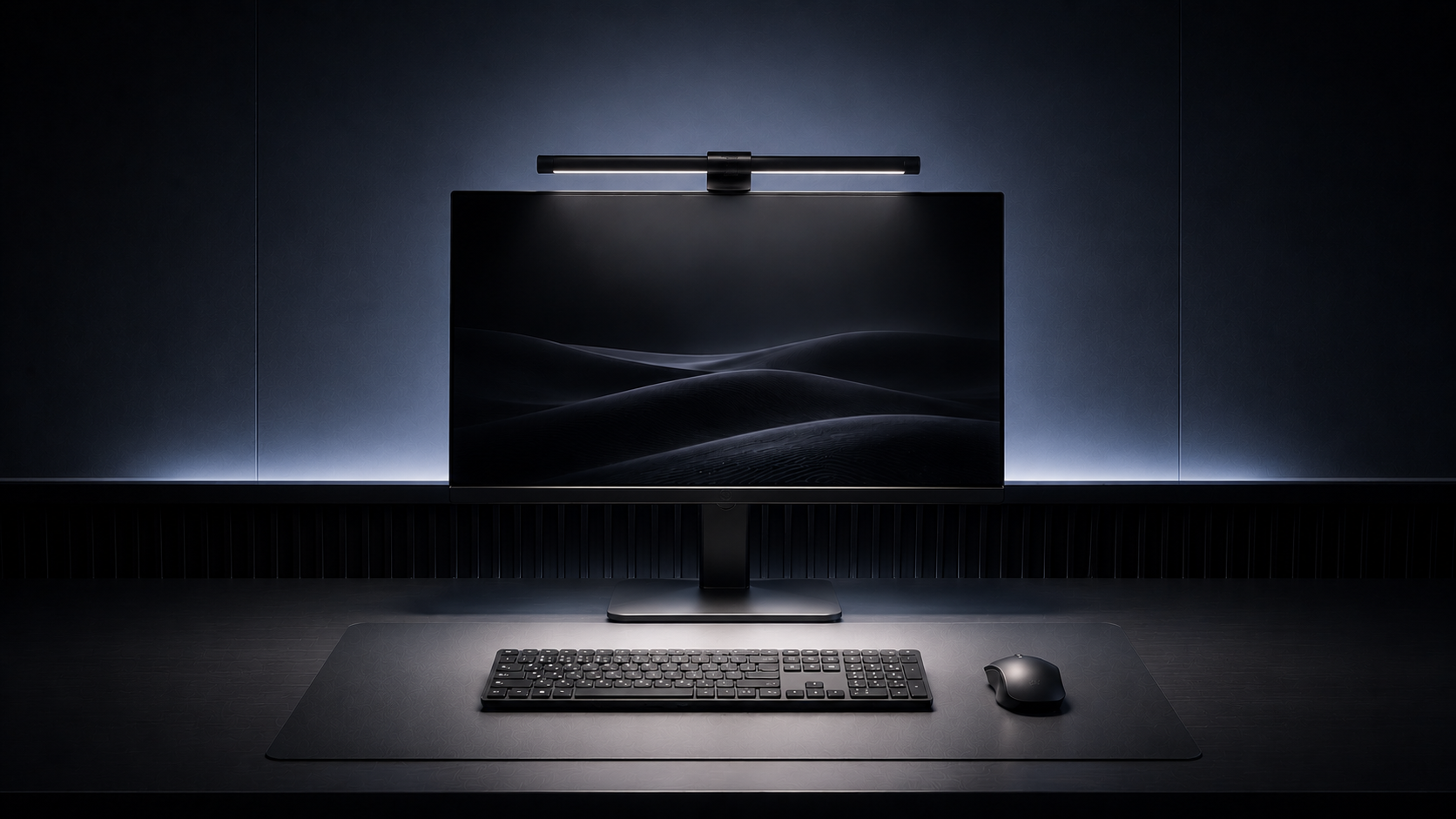
Balanced Layers. Softer Contrast.
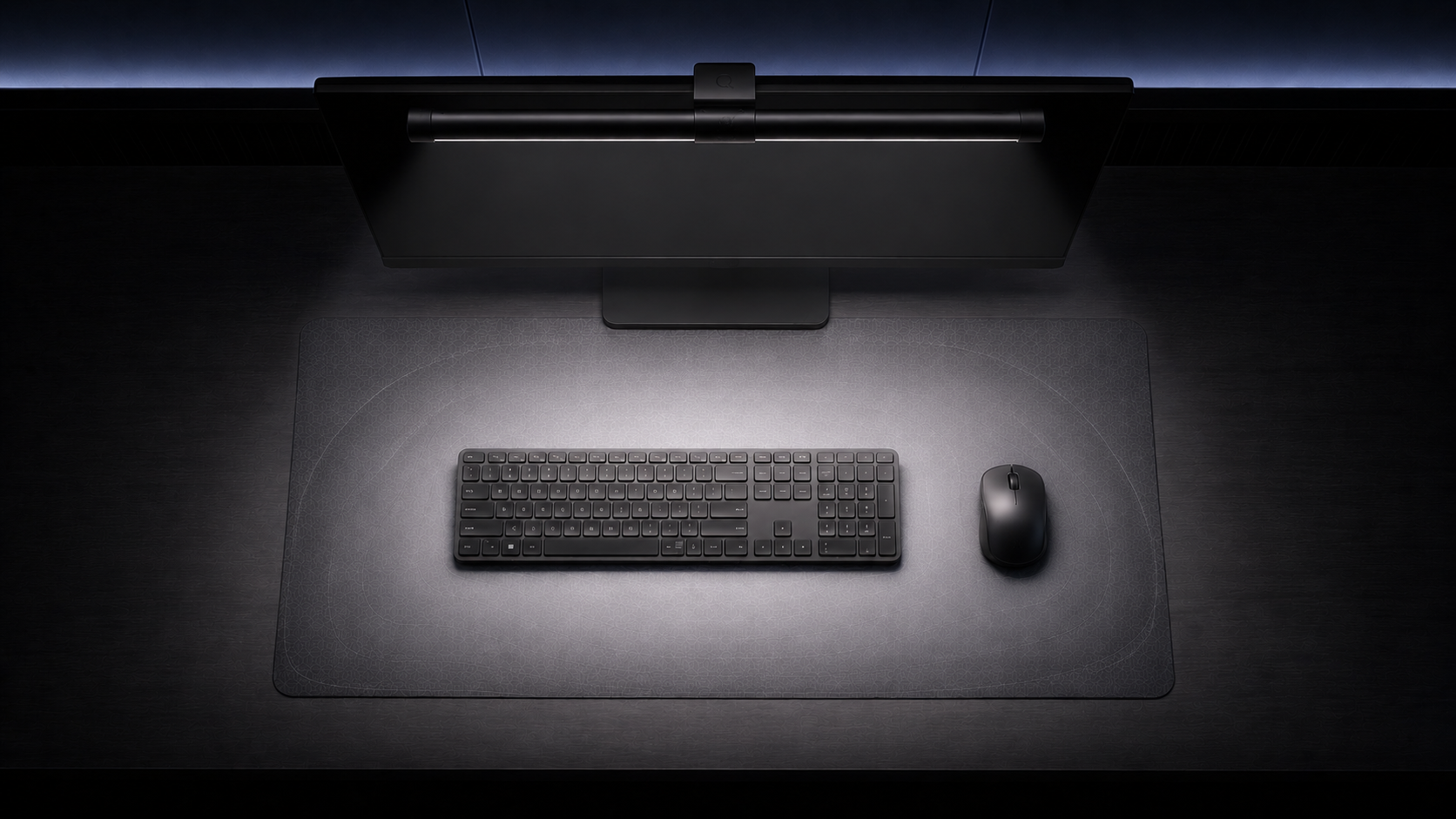
A 1:3 lighting relationship creates clearer depth between the desk and its surroundings, helping soften abrupt brightness transitions during long screen sessions. The screen can remain the brightest focal area while the desk plane and room layer stay softly visible.
1:3
Layered desk lighting relationship

Quntis Response
Core layer
Inner layer
Outer layer
Layered Desk Lighting
A side desk lamp can brighten part of the workspace, but its beam is not designed around the screen. Quntis starts from the screen-work setup: place useful light near the monitor, direct it toward the desk surface, and keep the surrounding field more balanced for long sessions.
Soft transition around the monitor and immediate desk zone.
Ambient depth for the background and room edge.
QUNTIS OPTICAL ENGINEERING
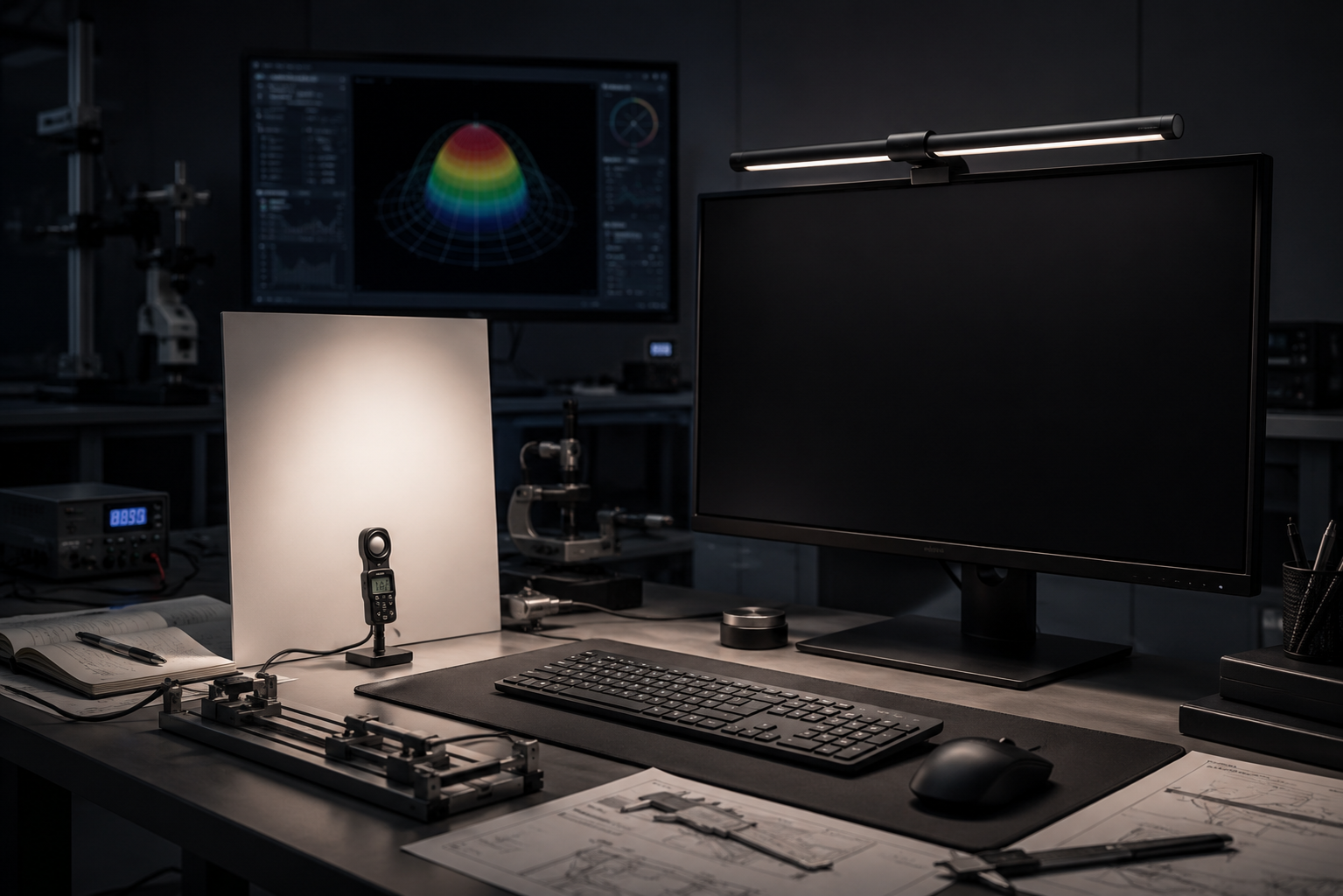
Designed around where light lands.
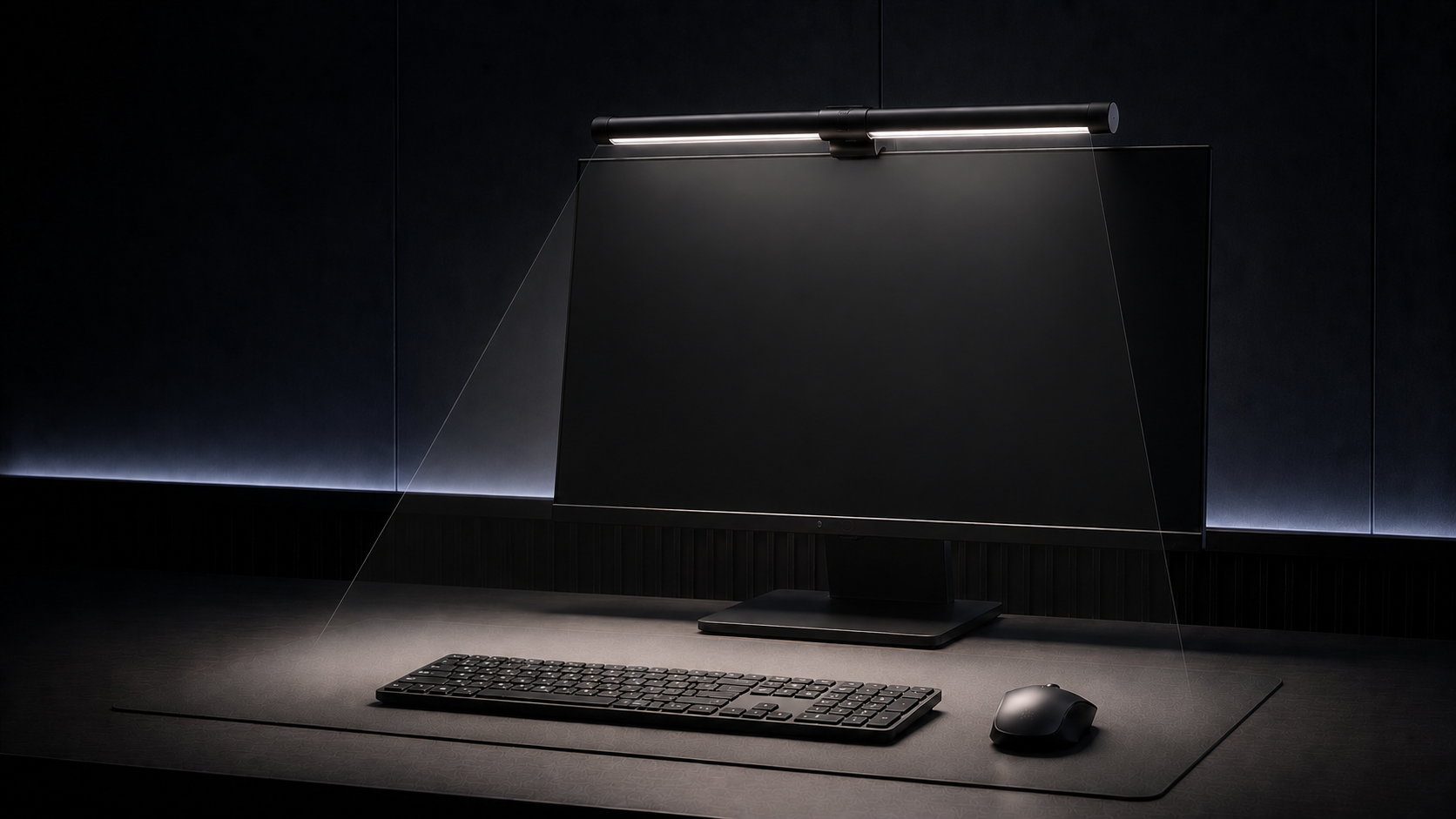
Quntis Eye-Care Design starts with light placement: where illumination is useful, where it should stay soft, and how the screen area stays visually clean. The asymmetric optical structure helps direct light toward the work surface while reducing distracting monitor reflections during long screen sessions.
PRECISION OPTICAL DESIGN
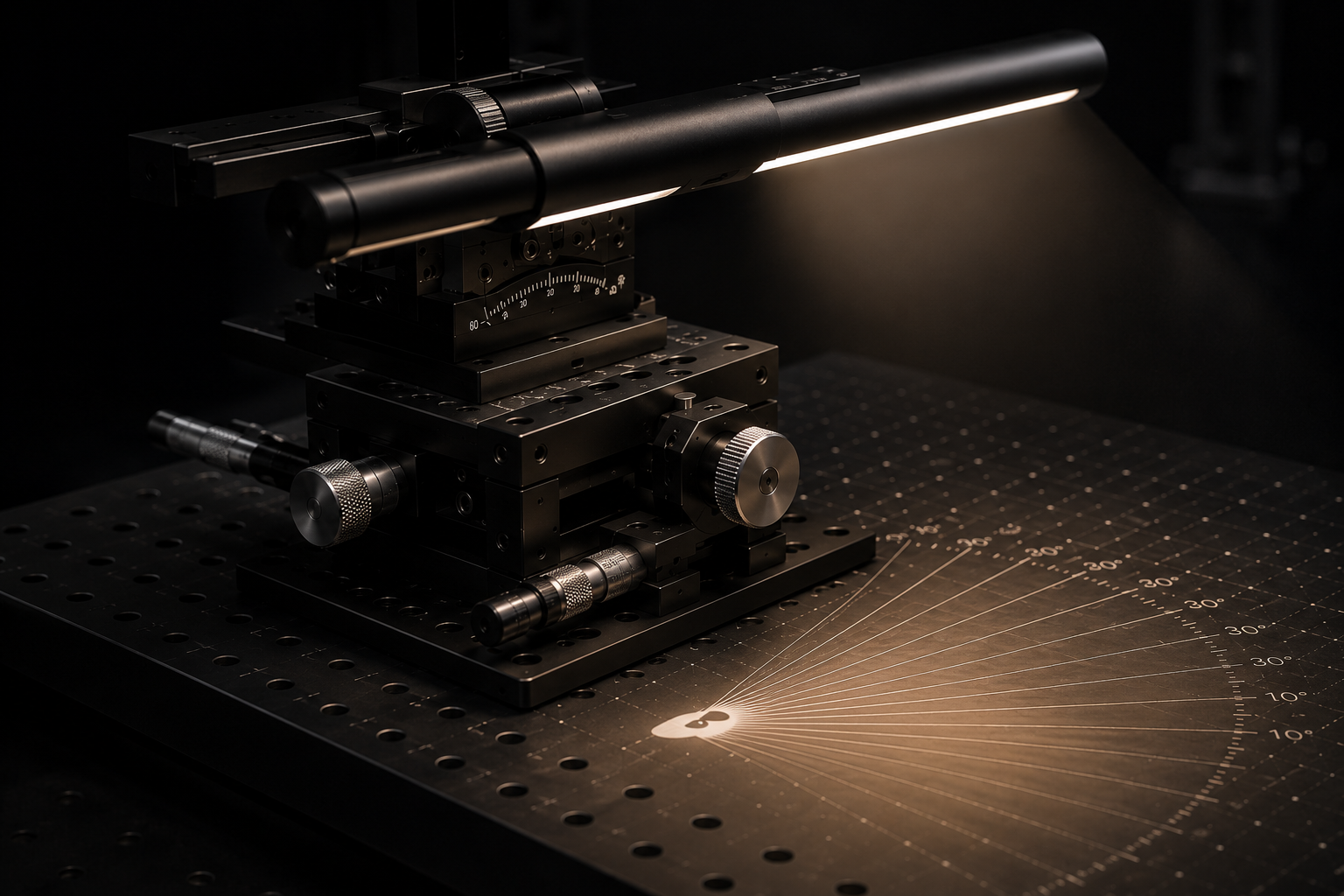
Small angles shape the whole desk.
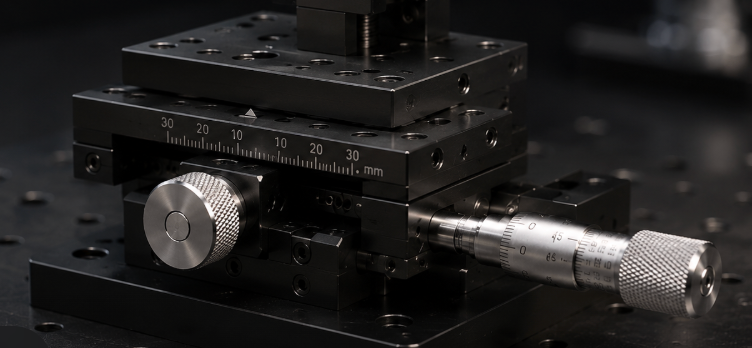
The way a monitor light bar is positioned changes where light lands. Quntis optical design focuses on controlled angles, stable alignment, and measured light distribution, helping direct useful illumination toward the work surface while keeping the screen area visually clean.
ENGINEERING RIGOR
Tested for Daily Use
Precision Optical Design
Dependable Desk Lighting
The Engineering Rigor Behind Every Beam
From drop tests to temperature-cycle checks, Quntis lighting systems are designed for the real conditions of daily desk work. But reliability is more than durability alone. It also means understanding the subtle lighting challenges users may not always name, then addressing them through precise optical design. By refining light placement, output stability, and adjustment structure, Quntis helps create desk lighting that feels dependable through long screen sessions.
Designed around repeated adjustment and long sessions
Light placement refined through measured angles
Stable structure, steady output, cleaner screen area
Fit matters because beam angle matters.
A stable clamp helps keep the light bar aligned with the monitor, so the beam stays directed toward the desk surface during long sessions.
PATENTED CLIP DESIGN
A steadier fit for more monitor shapes.
The clip is part of the lighting system. A secure, well-positioned mount helps keep the light bar aligned above the screen, so illumination stays directed toward the desk instead of shifting into the monitor area.
Designed for monitor thickness from 0.17–2.36 in (0.43–6 cm) and curved monitors from 1000R–1800R. Compatibility may vary by monitor shape and model.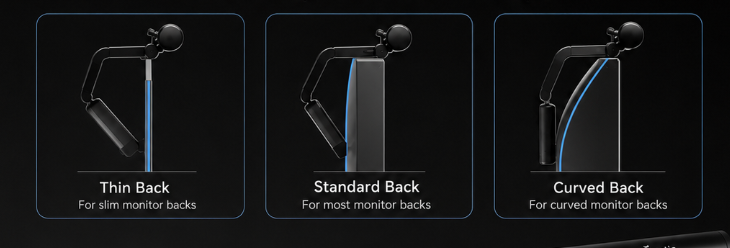
Light Path Preview
From scattered paths to desk-focused light.
A short loop shows the design logic: place the source near the monitor, guide useful light down to the work surface, and keep the screen surroundings calmer.
LONG-HOUR LIGHT QUALITY
Stable, adjustable light for long screen sessions.
Long desk work does not always need more brightness. It needs light that stays consistent and can be tuned to the task, the screen, and the room. Quntis combines stable output, brightness control, and adjustable color temperature to support a more balanced desk lighting environment.
Tested to Relevant Lighting Standards
Evaluated according to applicable standards for light source flicker, electromagnetic exposure, and photobiological safety.
IEEE STD 1789
Guidance for evaluating modulation and flicker in LED light sources.

IEC 62493
Assessment of electromagnetic field exposure from lighting equipment.
IEC 62471
Photobiological safety assessment for lamps and lamp systems.


Series Guide
Choose the light structure for your screen setup.
Each series applies the same eye-care design logic to a different desk environment.
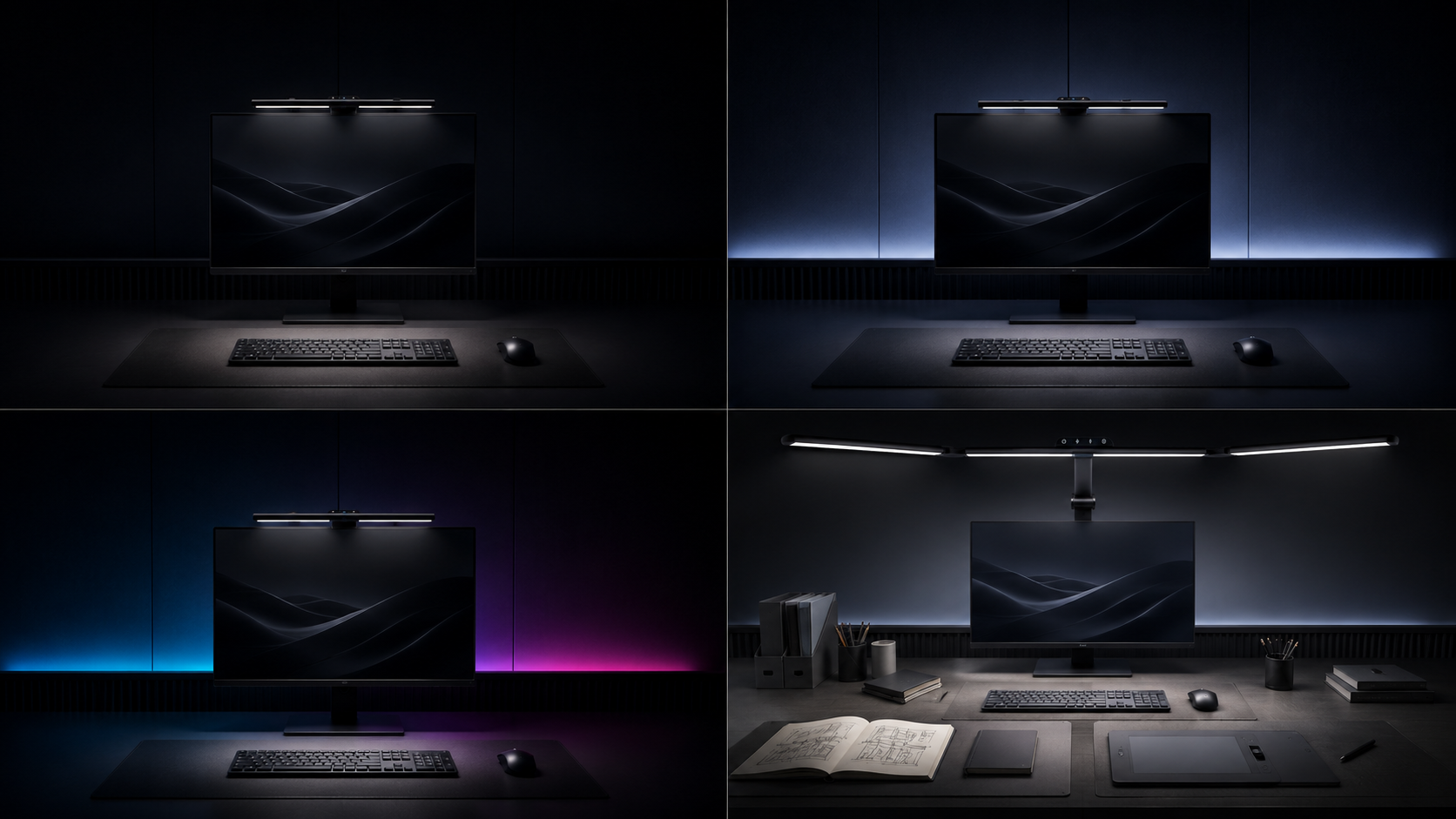
Front task lighting keeps the desk area visible beside the screen.
Front task light plus soft rear glow helps soften the transition between monitor and room.
Front task light plus RGB backlight supports immersive setups while keeping the desk surface usable.
Wider task lighting supports larger desks, reading, drawing, and multi-object work.